Showing posts with label Reading. Show all posts

Wednesday, April 18, 2018

Getting into Gear: Summer Scavenger Hunt

April 18, 2018 Heather
Spring semester is nearly over and we are getting into gear for our summer sessions here in the English Language Program. One activity that has worked well is the On-Campus/Off-Campus Scavenger Hunt. I developed this with my coworker, Tatjana Mulina, a couple years ago for a short-term summer course we were teaching. I modified it for last summer and it was a blast. In pairs or small groups, students are sent on a mission throughout campus and the surrounding community for about three hours to collect as many items and information pieces as they can.

Objectives: Practice scanning (signs and written information) and speaking skills (asking for information) in an authentic context; also, becoming more familiar with the campus and community

Results: It was fun to see the kids running back all sweaty from their labors in the summer heat, running around campus. They were really excited to show me all their documentation, including photos, brochures, and even an official printed estimate from the tire shop on the corner (one of the items asked how much a new set of tires cost). Apparently, the employees there were very friendly and helpful. Such a great experience to have our students interacting with native speakers outside an academic setting.


Download a copy of the scavenger hunt and adapt it for your campus.

Friday, April 15, 2016

Reading: Illustrate the Process of Recycling

April 15, 2016 Heather


For my low-intermediate reading class, we were covering a unit in our textbook on the environment, consumption, and trash. As a supplemental activity, I decided to have them look at a short text outlining the steps in recycling various types of materials. My main objectives here were 1) help them learn to deal with new vocabulary, especially on the technical and specialized side; and 2) simply understand and re-tell the information. Here, we weren't concerned with main ideas, inference, and critical thinking; rather, I wanted them to simply practice the important and widely used skill of reading for to find information.

To meet our first objective, I had the students first circle any unknown words (focusing on nouns) in the text. For the second objective, I gave them large sheets of paper and told them to illustrate to the process. I used the first section of the text, on recycling glass, and modeled the steps. Of course, my art skills are not amazing, but they were all pretty nice to me!

The entire text is found at:
From http://www.factmonster.com/ipka/A0934633.html

A Look at the Recycling Process


Did you ever wonder what happens to the objects that you toss into recycling bins? Here’s a look at how glass, plastic, aluminum and paper are recycled.

Plastic

Unlike glass, which is made entirely of natural substances—minerals--plastic is composed of man-made and raw materials, including petroleum and crude oil. Here’s how plastic is recycled.
  • People bring their used plastics to a recycling center.
  • The plastic is brought to a recycling plant where it is washed and inspected.
  • The recyclable plastic is washed and chopped into tiny flakes.
  • The flakes are separated in a flotation tank.
  • The flakes are dried and then melted into a liquid.
  • The liquid is fed through a screen for even more cleaning. It comes out in long strands.
  • The strands are cooled and cut into pellets.
  • The pellets then make their way to manufacturers who use them to make new products.


Step #1: Circle vocabulary. Use Google Images on their cell phones to find a picture of each word. (I encouraged them to use this as their main method for this activity, rather than use a translator or even a dictionary. I walked around and guided them to be sure they chose the correct image for the word (e.g. with screen).

Sample words they looked up: flakes, flotation tank, screen, strand, pellets


Step #2: Draw the process. See the example above.


Overall, I thought this was a fairly effective activity because it gave my students, who were at a lower proficiency level, a chance to be exposed to more technical reading and science and technology topics. And doing the illustrations, I believe, made the activity more engaging and stimulating than, say answering multiple-choice questions on the same type of reading.

Monday, March 11, 2013

Poster Sessions

March 11, 2013 Heather
I remember going to a presentation at a conference several years ago on poster presentations as a low-tech, but engaging activity. My coworker, Katy, came up with the idea of doing posters as a way for students to share a book that they had read. This is my second semester doing this, and it turned out well. I asked me students to include the following information on their posters:
  1. Book title and author
  2. Setting - 2-3 sentences
  3. Plot summary - 4-5 sentences
  4. Main characters - list of characters, a phrase telling who each person is, and 3 adjectives 
  5. Favorite passage - 2-3 sentences telling why they liked the passage
  6. 3 new vocabulary words - context sentences, part of speech, and meaning
  7. Pictures to illustrate and make the poster look attractive
I invited another class to come and see the posters, talk to the students. It was a great English-use activity, as they had to explain their book again and again for each student who passed by! Repetition always helps. 


Friday, March 8, 2013

Intensive Reading: Annotation

March 08, 2013 Heather

Annotating is by far my favorite intensive reading choice. I like to demonstrate this beforehand on the document camera for all to see, as well as after the activity to review.

Locating main ideas 
Underline sentence in each paragraph that summarizes the main idea. Show students various locations for main idea sentences: first sentence, second sentence, last sentence, or just repeated ideas throughout the paragraph.

Marking supporting details
Underline or circle key words/phrases in each paragraph; note the key transitions like "however", "but", "yet", "despite" if present; write the main idea in the margin. This works well for passages that give contrasting ideas (supporters vs. opponents).

Mapping/Outlining
Help students identify the main idea and supporting ideas by analyzing the structure. Create an outline of the entire article. Create a map of the article (main ideas, support, cause-effect, etc) on a poster. Using the map/outline/annotation to write a summary or paraphrase of the whole article. Or using the map/outline/annotation to answer the comprehension questions.

Tuesday, March 5, 2013

Reading and Following Directions

March 05, 2013 Heather
In my English for Engineering class, I developed this activity to help them practice reading and following directions.  It turned out really well!


Reading to Follow Directions: Absorbency

Question 1: How does a diaper absorb liquid?
Question 2: How much liquid can a diaper absorb?

Materials:
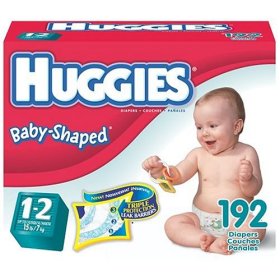
  •       1 super-absorbent, disposable diaper
  •       Scissors
  •       1 ziploc plastic bag
  •       Blue food coloring
  •       2 disposable cups
  •      Water
 Read and put the directions in order as best you can.  Then, check the answer key and do the experiment.

______ a. Pour the granules into one of the disposable cups.

______ b. Still leaving your hands inside the bag, lift the diaper material to the top of the bag and shake it for about thirty seconds.  You will see white granules, the size of salt, fall to the bottom of the bag.

______ c. Add the blue water slowly to the granules, drop by drop. See how much of the blue liquid the granules will absorb.  Record the amount in your notebook.

______ d. Cut the padded center into two equal halves.  Insert the two halves into a Ziploc bag.

______ e. With your hands inside the bag, pull apart the layers from the diaper. 

______ f. When about ½ tsp of granules are in the bottom of the bag, pull the material out and discard.

______ g. Use a pair of scissors to cut off the plastic edge on the diaper.  Leave only the padded center.  Discard the edge material. 

______ h. Fill the second disposable cup with water.  Add 3 drops of blue food coloring.

Answer Key:
  1. Use a pair of scissors to cut off the plastic edge on the diaper.  Leave only the padded center.  Discard the edge material.
  2. Cut the padded center into two equal halves.  Insert the two halves into a Ziploc bag.
  3. With your hands inside the bag, pull apart the layers from the diaper. 
  4. Still leaving your hands inside the bag, lift the diaper material to the top of the bag and shake it for about thirty seconds.  Allow the granules to fall to the bottom of the bag.
  5. When about ½ tsp of granules are in the bottom of the bag, pull the material out and discard.
  6. Pour the granules into one of the disposable cups.
  7. Fill the second disposable cup with water.  Add 3 drops of blue food coloring.
  8. Add the blue water slowly to the granules, drop by drop. See how much of the blue liquid the granules will absorb.  


Vocabulary Learned:
After your experiment, try to figure out these words from context.

discard – if you discard something, you probably put it ______________________________________. (Think about where you put the material today)

disposable – if the cups are disposable, after you use it, you can _______________________________________________________.  (What are we going to do with these cups after today?)

granules – a granule is another word for __________________________. (eg, _____________ of sand)

record – if you record the information, you ___________________________________________________.


Inference: Advertisements

March 05, 2013 Heather
To help students practice making inference, I did this fun activity in the computer lab. They really enjoyed this, and were pretty good about identifying the message and supporting it with the text and image in the ad.


Inference with Advertisements


Find one advertisement with some kind of written words. Google for “Magazine Ads.” Look at the images.
1. Write a 1-2 sentence description of the advertisement
- Who? What? When? Where? How? Why?
2. Write a 3-5 sentence interpretation to the advertisement
- What message(s) can be inferred from the advertisement?
- Who is the audience?  How does the written message reflect that audience?

Example:


BMW


 Description: This advertisement shows a simple gray car in a gray background.  The big words say, “The Only One You’ll Need.” The smaller text says, “Experience the freedom and peace of mind knowing you’ve made a great investment. Essentially, you are buying a car for life. Twenty years from now it will still get you from point A to B.”

Interpretation: In my interpretation, it seems that the message is that this car will last a long time.  The text, “Experience the freedom and peace of mind knowing you’ve made a great investment,” seems to speak to older people who think responsibly about their purchases.  It seems to say that this is the smart thing to do.  Also, when it says that it gets you from “Point A to B” seems to mean that the most important consideration in buying a car is reliability.  Because of this, this ad is definitely meant for older people (age 50+). 

Wednesday, March 21, 2012

Novel Study: Funny in Farsi

March 21, 2012 Heather

Lesson Plan: Introducing a Novel Study, Funny in Farsi
Length of Time: 80 minutes
Previous/Subsequent Lessons: Post-midterm; prior to now, we’ve done a lot of intensive reading of academic articles and a few short stories. We are now starting a novel study, to increase extensive reading for pleasure.
Objectives 
1) Remind students of an additional purpose in reading—to relate to someone else’s experience
2) Prepare them for the topic on immigration and introduce them to the novel


Procedure


Warm-up/Housekeeping (10 minutes)

  • Greeting, chat about spring break travels
  • How did the place you visited compare with Hammond?
  • Did you learn anything
  • Follow-up on their extensive reading assignment Collect Books
  • How many days did they read for 15 minutes or more?
  • Write their answer on a notecard along with their name


Topic Introduction: Immigrants in the USA


Discussion Questions: (10 minutes)


Compare international students (such as yourselves) with immigrants in the USA
International Students in the USA
Immigrants in the USA
Goals:
Challenges:
Resources:


How would your life be different if you knew that you were going to spend the rest of your life here in the USA?


Reading: “It Takes Courage” – from Impressions 1, Thompson & Heinle (30 minutes) 


  1. Distribute copies of the essay
  2. Reading instructions: You have 10-15 minutes to read as much of the article as you can. Don’t look up any words you don’t know—just skip them or guess them. After we finish, we’ll discuss: “What were the main obstacles Cecilia faced, and what is her advice for overcoming those obstacles?” (Question written on chalkboard)
  3. Discuss in groups of 3-4 the question. Report conclusions to the whole class.
Introduce the Novel: Funny in Farsi
Explain that we’ll be reading a book about an immigrant to the USA.
Previewing the book: Give a handout with the following questions. In groups, they need survey the book.

Previewing Funny in Farsi
Cover: Look at what is on the cover. Answer the questions.
What do you think the tone/style of the book will be? Why?
 What does “memoir” mean?
Back Cover: Read the summary on the back
What characters will be in the book?
What are some themes/topics we will see in the story?
Table of Contents
Look at the chapter titles. What do you think each chapter will be about?

Homework: Read p. 1-16 (First three chapters) for next class to prepare for a quiz; Write a reflection on Blackboard.

Saturday, February 4, 2012

Extensive Reading: Subtitled Films

February 04, 2012 Heather
For an extensive reading activity, and as a pleasant change of pace in my rigorous reading class, I occasionally show subtitled foreign films. Along with a worksheet with questions to answer as we go along, this helps students focus more on "chunking." See my article in Essential Teacher, 6(2).

This week, we did a film called, Nose, Iranian Style, done in Farsi, discussing the phenomenon of the popularity of nose jobs in Iran. It definitely held students' interest and gave us plenty to talk about.


Reading Speed: Chunking

February 04, 2012 Heather
I wanted to introduce the concept of "chunking" as a way of increasing reading speed. I wanted to show my students now NOT to read--word by word, individually, and how TO read--in chunks. So, I made this powerpoint presentation. I rapidly moved through the slideshow, demonstrating that if you look at each word individually, it will take a long time. Check it out.


I followed this up by giving them some articles and having them divide it up into "chunks" and then try to read it. Now we just need to keep practicing.